Robotic Hip Replacement
How Dr. Patel uses Mako robotic assistance in total hip replacement, how it relates to the anterior approach, and what it does not change.
The short answer
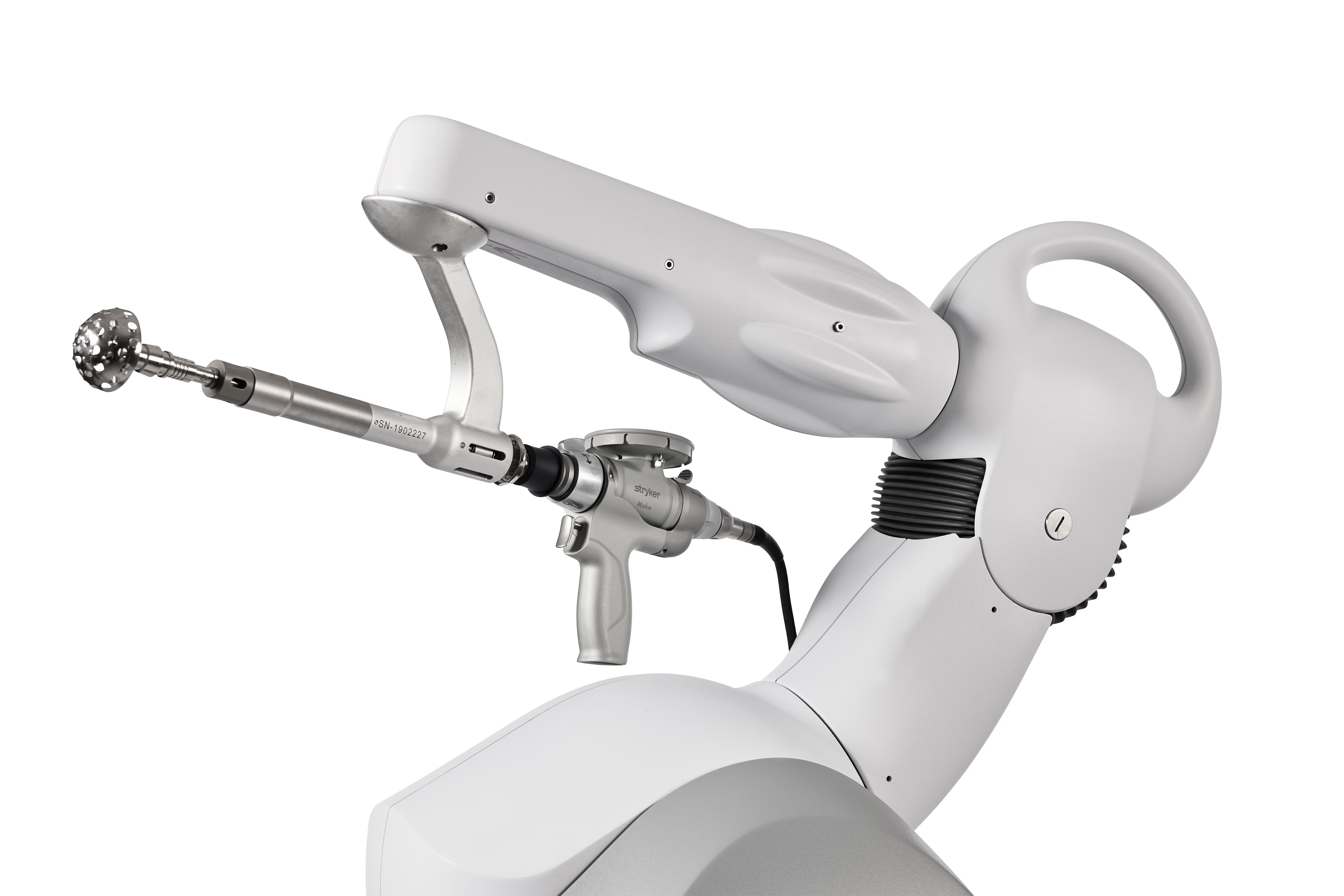
Robotic-assisted total hip replacement uses a CT-based plan and robotic guidance to support cup placement, leg-length management, and implant positioning. Dr. Patel performs robotic hip replacement on the Mako System, including alongside the anterior approach for selected patients.
What robotic assistance adds in the hip
In hip replacement, the position of the socket component (the cup) and the management of leg length and offset, the spacing that sets muscle tension around the hip, are among the most consequential technical details. A CT-based robotic plan gives the surgeon patient-specific targets for those variables and live feedback while executing them.
The robotic arm does not perform the operation. It helps the surgeon place components according to a plan built for your anatomy, and the surgeon adjusts that plan whenever the operation calls for it.
Robotics and the anterior approach
Robotic assistance and the surgical approach are separate decisions. Dr. Patel offers anterior and bikini-incision anterior approaches for selected patients and can combine them with robotic guidance when that serves the plan.
Neither the approach nor the platform is a promise of a particular outcome. Candidacy, execution, and preparation still carry the weight.
An honest word on evidence
A CT-based robotic plan gives the surgeon patient-specific targets for cup position and leg length, and measures the result against that plan during the operation. Whether that consistency translates into better long-term function or implant survival for every patient is still an active area of study, and this page will not claim otherwise.
Ask what about your anatomy makes robotic planning useful, and how Dr. Patel would manage cup position and leg length without it.
What robotic-assisted hip replacement looks like
This patient-education animation from Stryker walks through how a Mako total hip replacement is planned and carried out. It is a general illustration of the technology, not a recording of any specific operation.
Use the consultation to make the decision clearer.
- Would robotic planning change how you position my implants?
- Can robotic assistance be combined with the anterior approach in my case?
- How do you manage leg length, with or without the robotic arm?
- What does the robotic arm not change about my operation or recovery?
Sources and further reading
- Total Hip ReplacementAmerican Academy of Orthopaedic Surgeons
- Total Hip ReplacementAmerican Association of Hip and Knee Surgeons