Total Hip Replacement
A patient-first guide to total hip replacement, candidacy, alternatives, preparation, and questions for consultation.

The short answer
Total hip replacement replaces the damaged bearing surfaces of the hip. It may be considered when hip disease causes meaningful pain or loss of function despite reasonable non-surgical care, and when the patient is ready to discuss surgery.
What the operation is designed to address
The operation replaces the worn ball-and-socket surfaces with implant components. The practical goal is to improve the joint problem that is limiting movement; it does not replace the work of rebuilding strength, balance, and confidence.
The timing is personal. An X-ray can show damage, but it cannot decide how much the hip is taking from sleep, work, walking, exercise, or independence.
What changes the plan
Anatomy, bone quality, prior surgery, medical conditions, home support, and personal goals can change the approach, implants, setting, and early plan.
A consultation should cover the alternatives, the risks, the expected limitations, and the range of possible outcomes, not only the potential benefits.
The risks, named plainly
Hip replacement is major surgery, and it carries real risks even when everything is done well: infection, blood clots, dislocation, fracture of the bone during or after surgery, a difference in leg length, nerve or blood-vessel injury, and the possibility that the implant loosens or wears enough to need another operation years later. Serious complications are uncommon, but none of them is zero, and how each one applies to you belongs in the consultation. The American Academy of Orthopaedic Surgeons patient guide, linked in the sources below, covers each of them in more depth.
Surgery is also not the only option on the table. Activity changes, targeted strengthening and therapy, weight management where it applies, anti-inflammatory medication, and selected injections remain real choices, and they still help some people even with advanced arthritis.
Where you sit is an individual question. Your health, your anatomy, your other medical conditions, and your medications all change the picture, which is exactly what the consultation is for. Dr. Patel will tell you where your risk sits, what the practice does to lower each one, and, just as importantly, whether waiting is a reasonable option for you. Choosing to wait, with a plan, is a decision he supports when it fits your goals.
What the implant is made of, in plain terms
A hip replacement rebuilds the joint from two matching parts. A stem set into the top of the thigh bone carries a smooth ball, and a cup lined with a durable plastic surface sits in the socket of the pelvis. The ball is usually ceramic and the liner a specially treated, wear-resistant plastic. It is an artificial bearing chosen for your anatomy and activity rather than a copy of your original joint.
Those parts stay in place one of two ways. Most are press-fit, meaning the metal has a slightly roughened surface that your own bone grows into over the weeks after surgery; some are held with bone cement, which fixes them immediately. Neither choice is automatically better, and the surgeon may recommend one based on your bone quality, your age, and how the hip looks on imaging.
What the day of surgery is actually like
Many hip replacements are done under spinal or regional anesthesia, which numbs the lower body while medications keep you comfortable; the anesthesia team recommends the plan that fits your health and the operation.
The surgery itself usually takes on the order of one to two hours. Afterward you rest in a recovery area while the numbness wears off and the team checks that your pain is controlled.
For many people, a physical therapist helps them stand and take first steps the same day, which is expected and encouraged. Whether you go home that evening or stay overnight depends on how you are moving, how your pain responds to oral medication, and the support waiting for you at home.
Two paths to the same joint.
Two of the ways surgeons reach the hip; the route differs, the joint is the same. The choice follows your anatomy and the plan.
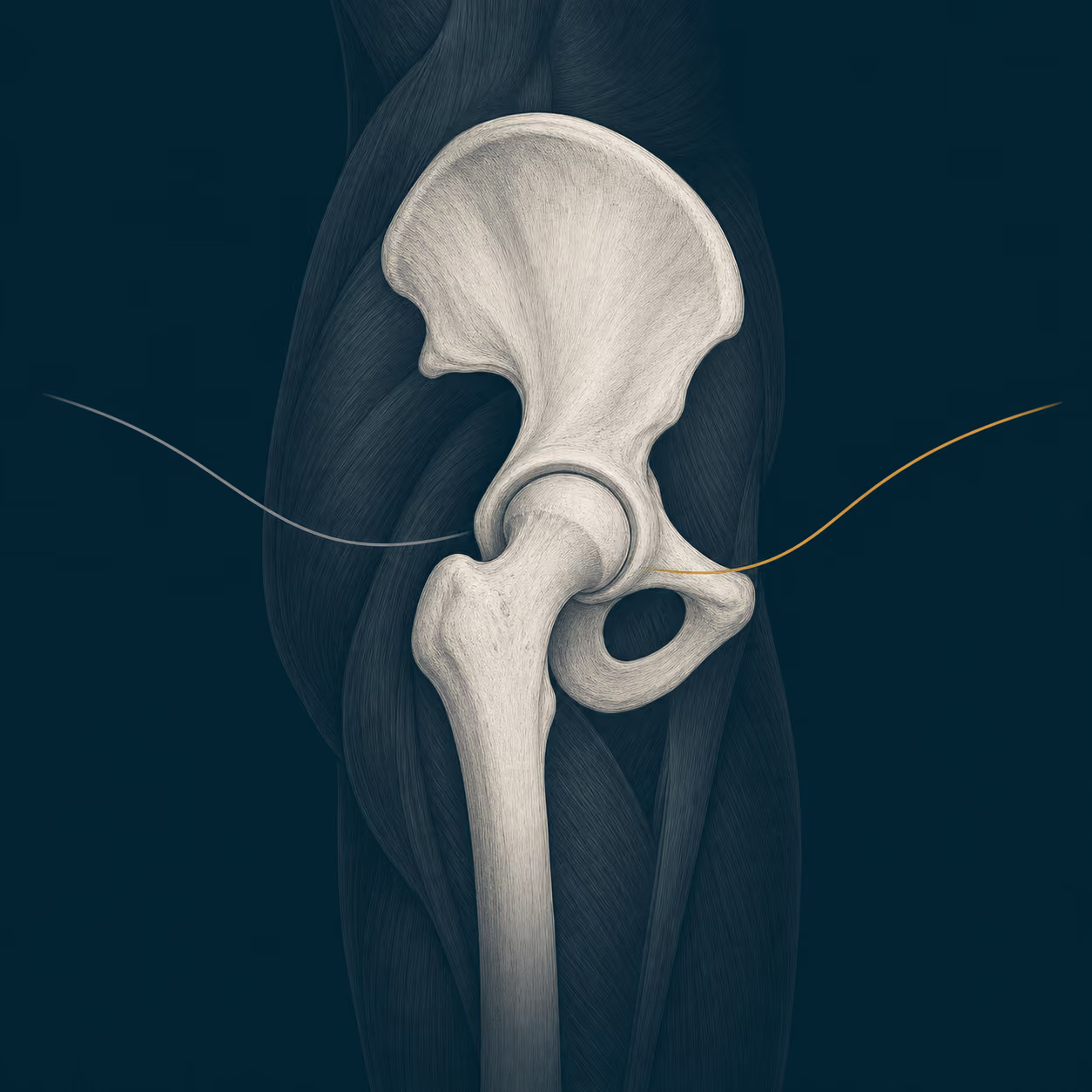
- Anterior arrives from the front, along a natural seam between muscles
- Posterior arrives from the back, through muscle that is repaired at closure
The implant, shown plainly.
Four parts rebuild the ball and the socket.
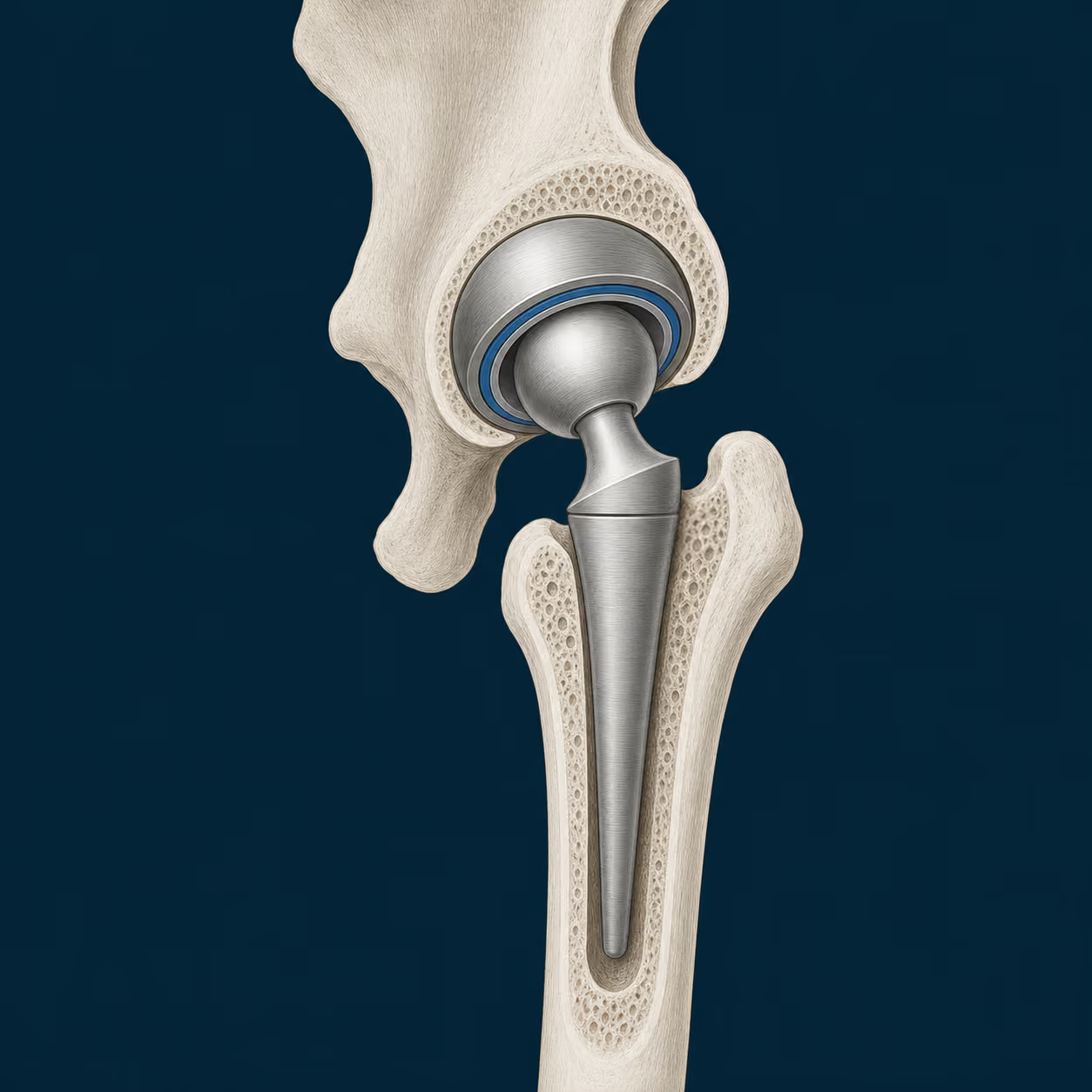
- Cup seats in the pelvis
- Liner is the wear-resistant plastic bearing surface
- Ball is ceramic or metal and rides in the liner
- Stem sets into the top of the thigh bone and carries the ball
How hip replacement works
This one-minute patient-education animation from Stryker shows how the ball and socket of the hip are replaced. It is a general illustration, not a recording of any specific operation; the safety information at the end is Stryker’s.
Use the consultation to make the decision clearer.
- Have I tried reasonable non-surgical care?
- What would make surgery too early, or too risky, for me?
- What approach fits my anatomy?
- Is same-day discharge appropriate for me?
- What are the important risks in my case?
- Based on my bone quality and age, would you plan a press-fit or cemented implant, and why?
- What anesthesia approach would you expect for me, and how will my pain be managed afterward?
- Realistically, am I likely to go home the same day or stay overnight, and what would decide that?
Sources and further reading
- Total Hip ReplacementAmerican Academy of Orthopaedic Surgeons
- Total Hip ReplacementAmerican Association of Hip and Knee Surgeons