Meniscus Tears and Meniscectomy
What a meniscus tear is, which tears an operation helps, and why a worn tear and a torn-in-one-moment tear are treated differently.
The short answer
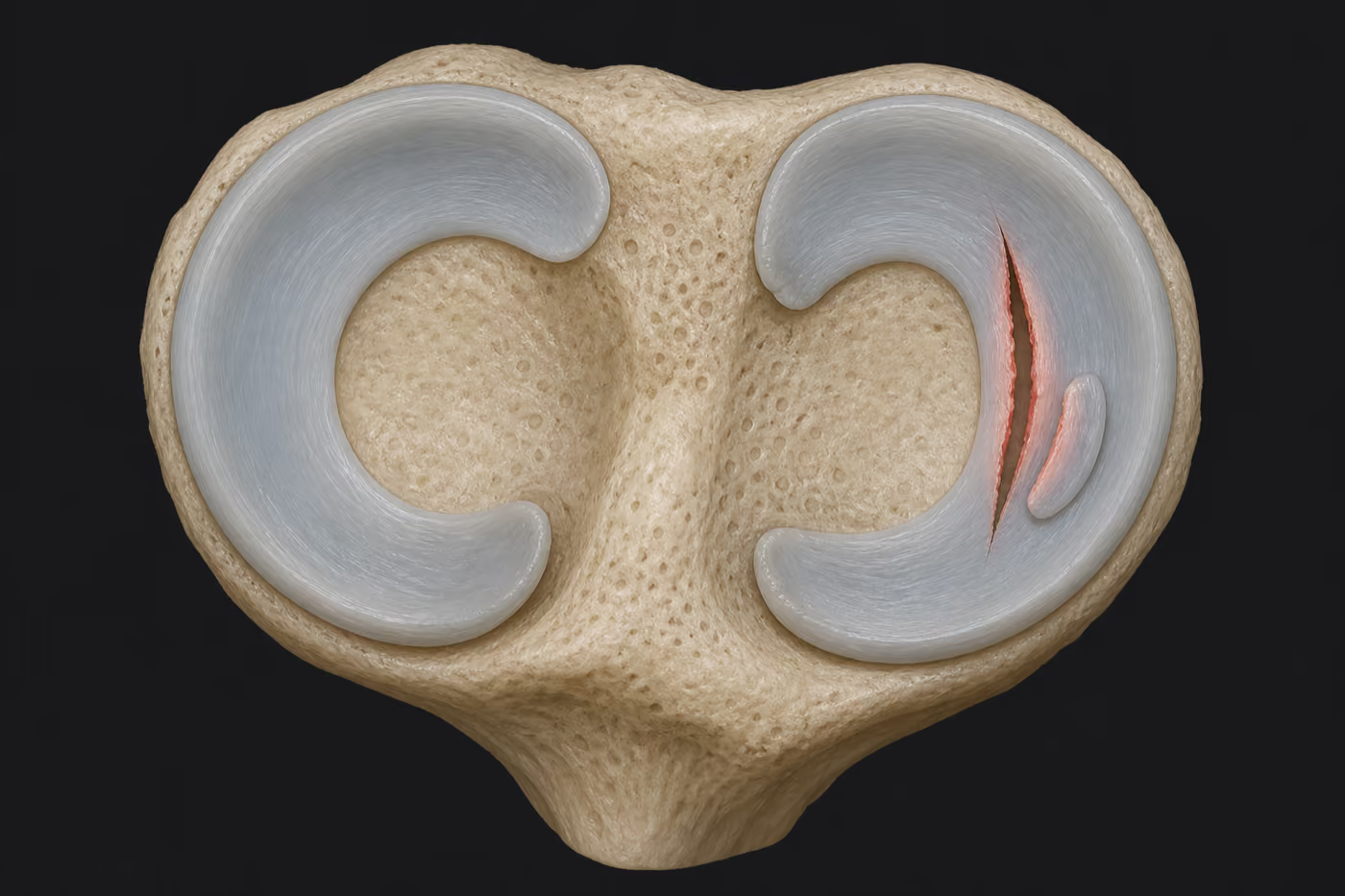
The meniscus is the C-shaped cushion between the thighbone and the shinbone. Tears fall roughly into two groups: a tear that happened in one moment, usually with a twist, and a tear that wore in gradually. Which group yours is in changes the treatment more than the word "tear" does.
Two tears with the same name
A traumatic tear happens in a moment. The knee twists, something gives, and swelling follows over hours. A degenerative tear is different: the tissue thins with age and frays without a single injury, and it shows up on scans of knees that have never hurt.
Both read as "meniscus tear" on an MRI report. They do not behave the same way, and they do not respond to surgery the same way, which is why the history you give matters as much as the scan.
What the strongest trial found
A double-blind trial published in the New England Journal of Medicine randomly assigned 146 patients aged 35 to 65, all with a worn medial meniscus tear and no knee arthritis, to either arthroscopic partial meniscectomy or a sham operation. Neither the patients nor the assessors knew which they had.
At one year the two groups had improved by about the same amount. In plain terms: for this kind of worn tear, the real operation did not beat a pretend one. That finding does not apply to every tear, and it is the reason the evaluation has to sort out which tear you have before an operation is discussed.
When an operation does earn its place
Mechanical symptoms are the clearest signal. A knee that locks and will not straighten, catches on something with each step, or gives way can have a torn fragment physically caught in the joint. Removing or repairing that fragment addresses a mechanical problem, which is what arthroscopy is good at.
Age and tissue quality matter here too. A younger patient with a clean tear pattern may be a candidate for repairing the meniscus rather than trimming it, which preserves more of the cushion. Dr. Patel performs arthroscopic meniscus surgery in selected knees, and the selection is the whole conversation.
What to try first, and what the operation risks
For most degenerative tears the first plan is not surgical: activity adjustment, a course of physical therapy aimed at the muscles around the knee, anti-inflammatory medication where it is safe for you, and sometimes an injection. Many people improve enough that an operation never comes up.
Arthroscopy is still an operation. It carries risks worth naming: infection, blood clots, stiffness, and the real possibility that the knee still hurts afterward. When arthritis is the main problem, a scope is unlikely to help for long, and the honest conversation moves to the arthritis options instead.
Common questions
Does every meniscus tear need surgery?
No. Many tears, particularly worn ones that developed gradually, improve with therapy, activity changes, and time. Surgery is considered mainly when the knee locks, catches, or gives way, or when a tear in a younger knee is repairable.
Is a meniscus tear the same as arthritis?
No, but they often appear together. Worn meniscus tissue and worn cartilage tend to arrive around the same age. When arthritis is the main source of pain, treating the tear alone is unlikely to fix the knee.
Can a meniscus be repaired instead of trimmed?
Sometimes. Repair depends on where the tear sits, its pattern, the quality of the tissue, and your age, because only part of the meniscus has a blood supply good enough to heal. Repair also asks more of the recovery than trimming does.
Use the consultation to make the decision clearer.
- Did my tear happen in one moment, or has it worn gradually?
- Does my knee actually lock or catch, or is it pain and swelling?
- How much arthritis is on my imaging, and does it change what a scope could do?
- Is my tear repairable, or would part of the meniscus be trimmed?
- What would you expect physical therapy to accomplish before we discuss surgery?
Sources and further reading
- Meniscus TearsAmerican Academy of Orthopaedic Surgeons
- Arthroscopic partial meniscectomy versus sham surgery for a degenerative meniscal tearNew England Journal of Medicine (Sihvonen et al., 2013)