Quadriceps Tendon Repair
A torn quadriceps tendon breaks the connection that straightens the knee. How it is recognized, why it is usually repaired promptly, and what recovery involves.
The short answer
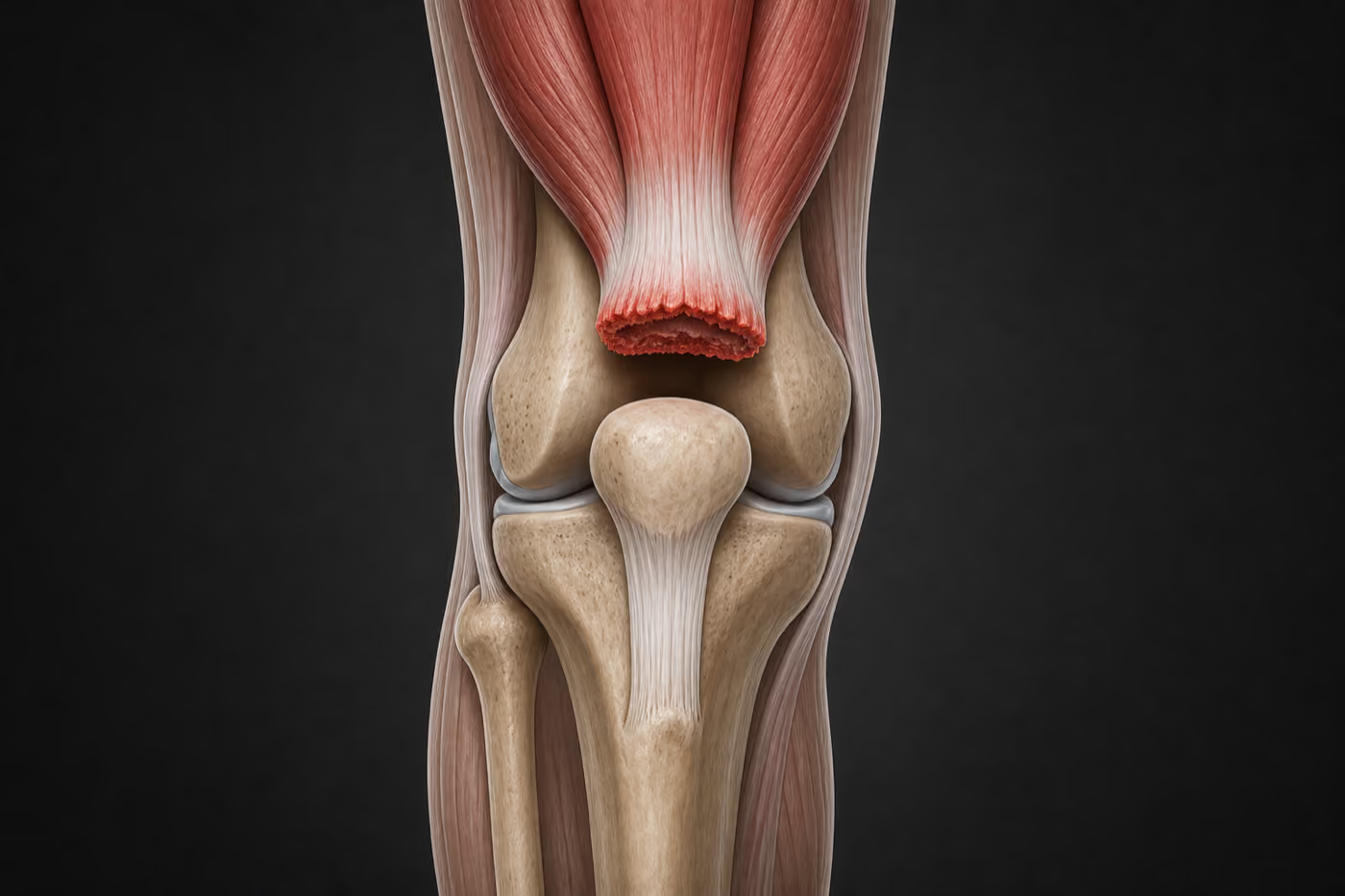
The quadriceps tendon connects the thigh muscle to the top of the kneecap. When it tears completely, the muscle can no longer straighten the knee. It is the same mechanical problem as a patellar tendon tear, one level higher, and it tends to happen to a different group of people.
Where it sits, and who it happens to
The quadriceps tendon attaches above the kneecap; the patellar tendon attaches below it. Both carry the same job, which is straightening the knee, so a complete tear of either produces the same practical problem.
Quadriceps tendon tears are more common after about age 40, and often happen with a stumble or a fall onto a bent knee. Certain medical conditions and some medications can weaken tendon tissue, which is worth mentioning at the visit.
What tells us it is torn
The usual story is a pop, swelling, and being unable to straighten the knee or hold it straight when it is lifted. There may be a dip you can feel just above the kneecap, and the kneecap may sit lower than usual.
Examination generally tells the story, and imaging confirms whether the tear is complete or partial. That distinction drives the plan more than the amount of pain does.
Repair, and the recovery that follows
A complete tear is repaired by reattaching the tendon to the top of the kneecap with strong sutures, usually through bone tunnels or with anchors. Repairing it sooner is generally more straightforward, because tendon ends retract with time.
Afterward the knee is protected while the repair heals, with a planned schedule for motion and weight. Strength returns slowly, and the therapy is not optional. Some patients keep a small strength difference between legs long term.
The risks worth naming
Infection, blood clots, stiffness, incomplete strength recovery, and re-tear are all real, and re-tear is more likely when the repair is loaded too early. Partial tears with an intact straightening mechanism are sometimes treated in a brace instead, without an operation.
Dr. Patel performs quadriceps and patellar tendon repair. If you cannot straighten your knee after an injury, that finding is the reason to be evaluated promptly rather than to wait and see.
Common questions
What is the difference between a quadriceps and a patellar tendon tear?
Position. The quadriceps tendon attaches above the kneecap and the patellar tendon below it. Both connect the thigh muscle to the leg, so a complete tear of either leaves you unable to straighten the knee.
Does a quadriceps tendon tear always need surgery?
No. A partial tear with an intact straightening mechanism can sometimes be treated in a brace with therapy. A complete tear generally needs repair, because the connection that straightens the knee is no longer continuous.
Use the consultation to make the decision clearer.
- Is my tear complete, or partial with the mechanism intact?
- How soon should the repair happen?
- Do any of my medications or conditions affect tendon healing?
- What is the brace and weight-bearing plan?
- How much strength difference between legs is usual afterward?
Sources and further reading
- Quadriceps Tendon TearAmerican Academy of Orthopaedic Surgeons