Hip Osteonecrosis and Core Decompression
Osteonecrosis is a blood-supply problem in the hip, not ordinary arthritis. What core decompression can and cannot do, and how stage changes the answer.
The short answer
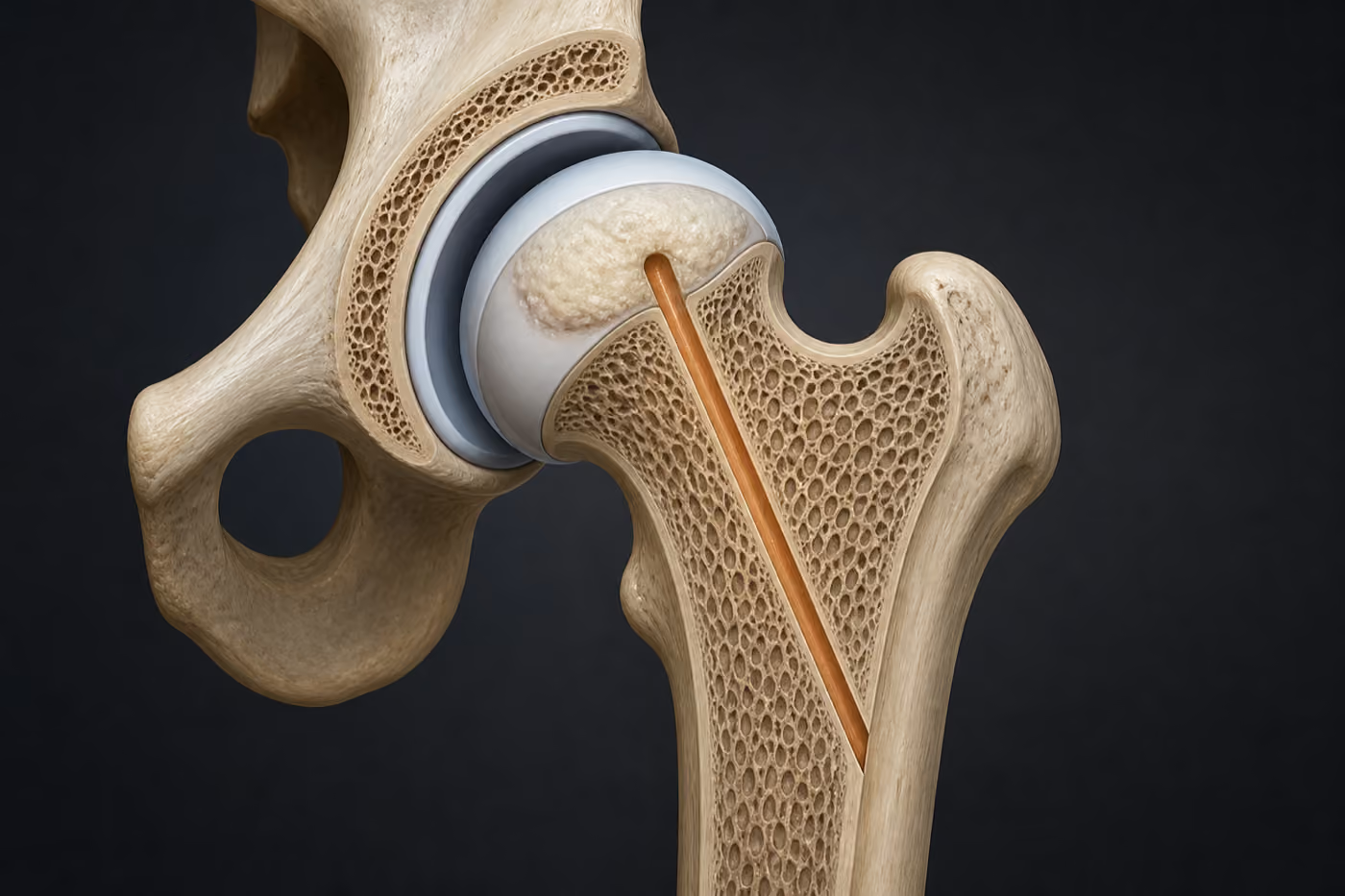
Osteonecrosis of the hip means part of the ball of the joint has lost its blood supply and the bone is dying. Caught early, an operation called core decompression can sometimes relieve pressure and pain and delay a replacement. Once the ball has collapsed, that window has usually closed.
What osteonecrosis is
The ball at the top of the thighbone depends on a modest blood supply. When that supply is interrupted, an area of bone dies. The joint surface above it can then weaken and, in time, collapse.
It is not the same as ordinary wear-and-tear arthritis, and it often affects younger adults. Known associations include high-dose steroid use, heavy alcohol use, sickle cell disease, prior hip injury, and some medical treatments; in some people no cause is ever identified.
Why it is worth catching early
Early on, the bone is dying but the surface is still round. Later, that surface collapses and the joint becomes irregular, at which point the problem behaves much more like advanced arthritis.
X-rays can look normal in the early phase, so an MRI is often what makes the diagnosis. If you have hip pain and one of the known risk factors, that history is worth raising directly.
What core decompression is
Core decompression drills one or more channels into the dead area of bone. The intent is to relieve pressure inside the bone, relieve pain, and encourage new blood vessels to grow into the area, which may delay or avoid a replacement.
A Level I meta-analysis in the Journal of Orthopaedic Surgery and Research pooled 32 studies covering 2,441 hips. Overall, about 65% of hips were counted as successful, meaning they had not gone on to hip replacement and had not progressed on imaging. Success differed significantly by stage, and the authors advise caution in advanced disease. Read plainly: roughly two out of three hips did well, and early hips did better than late ones.
When replacement is the better answer
Once the ball has collapsed, or arthritis has developed on both sides of the joint, core decompression is unlikely to help. Total hip replacement is then the operation that reliably addresses the pain, and it is a considered choice rather than a failure of the earlier plan.
Core decompression carries its own risks: infection, blood clots, fracture through the drilled channel, persistent pain, and the possibility that the hip progresses anyway and needs replacement later. Dr. Patel performs core decompression for selected hips and total hip replacement when that is the better fit, so the discussion is not weighted toward one answer.
Common questions
Is osteonecrosis of the hip the same as arthritis?
No. Osteonecrosis is a loss of blood supply to part of the bone. Arthritis is loss of the cartilage surface. Osteonecrosis can lead to arthritis once the ball collapses and the joint becomes irregular, but it starts as a different problem.
Does core decompression always avoid a hip replacement?
No. In a meta-analysis of 32 studies covering 2,441 hips, about 65% were counted as successful, and results were significantly better in earlier stages. It can delay or avoid replacement in selected hips, and it cannot promise to.
How is hip osteonecrosis diagnosed?
Usually with an MRI. Early osteonecrosis often does not show on plain X-rays, so a normal X-ray does not rule it out when the history and symptoms fit.
Use the consultation to make the decision clearer.
- What stage is my osteonecrosis, and has the surface collapsed?
- Do I have a risk factor that can be changed?
- What is the realistic chance core decompression delays a replacement in my case?
- What activity restrictions follow the procedure?
- If it does not work, what does that mean for a future hip replacement?
Sources and further reading
- Osteonecrosis of the HipAmerican Academy of Orthopaedic Surgeons
- The efficacy and safety of core decompression for the treatment of femoral head necrosis: a systematic review and meta-analysisJournal of Orthopaedic Surgery and Research (Hua et al., 2019)